

Have you ever felt like your thoughts, actions, or daily routine are all out of sync, like you’re moving without any clear rhythm or flow? Many people search for balance but still struggle to find that steady feeling of control in their life or mind. This is where pulsamento becomes interesting, because it reflects that natural sense of timing and inner rhythm we often miss in our busy days.
In this blog, you’ll learn what pulsamento really means and how it connects to music, the body, and everyday life in a simple and practical way. We’ll explore how pulsamento can help improve focus, calm the mind, and bring more structure to your routine through rhythm-based understanding. By the end, you’ll clearly see how this concept can make your life feel more balanced and easier to manage.
What Is Pulsamento?
Pulsamento refers to a steady beat or natural pulse that flows consistently through sound, movement, and life itself. At its core, it represents a repeating rhythm that creates structure and stability. In simple terms, it is the underlying beat that keeps everything in sync whether in music, body functions, or daily routines.In music theory, pulsamento acts as the foundation of musical timing.
It guides tempo, supports rhythm exercises, and ensures that every note aligns with a consistent beat. Without it, music would feel scattered and unpredictable.Beyond music, exists in the human body as the heartbeat and breathing pattern. These natural pulses regulate the nervous system and maintain balance.
When your heartbeat is steady and your breathing is controlled, your mind feels calmer and more focused.Pulsament also connects to broader concepts like flow and timing, movement patterns, and harmonic balance. It teaches us that everything in life follows a rhythm even if we are not always aware of it.Understanding pulsament is the first step toward improving how you move, think, and perform in everyday life.
Must Read: Betterthisworld Betterthistechs News: Real Tech Impact Guide 2026
Origin Of Pulsamento

The origin of pulsamento goes back to ancient ideas of rhythm, movement, and natural pulse found in both language and life. The term is linked to the Latin word Pulsus, meaning pulse or beat, and connects closely with the Greek concept Rhythmos, which refers to flow and timing. Early civilizations used these ideas to understand repeating rhythm in nature, such as ocean waves and seasonal cycles.
Over time, this idea developed into a structured understanding of rhythmic patterns in music and human behavior. The steady beat became a way to organize sound, movement, and even daily routines. Musicians later refined it using tools like the metronome to control tempo and improve musical timing. Today, pulsament is seen as a universal principle that connects natural pulse with harmony and flow.
Key origins and influences of Pulsamento:
- Comes from Latin word “Pulsus” (pulse/beat)
- Linked to Greek concept “Rhythmos” (flow and timing)
- Inspired by natural patterns like ocean waves and cycles
- Evolved into music theory and structured rhythm training
Why Pulsamento Matters
Pulsamento plays a crucial role in maintaining balance across different aspects of life. It provides structure, improves coordination, and enhances awareness of timing and flow.One of the key reasons pulsament matters is its impact on focus and concentration. When you follow a steady beat, your brain becomes more organized. This helps in tasks that require attention, such as studying, working, or learning new skills.
It also supports mental clarity and personal discipline. A consistent rhythm trains the brain to stay aligned with patterns, reducing confusion and improving decision-making.From a health perspective, pulsameno influences the nervous system. A stable breathing pattern and controlled heartbeat promote relaxation exercises and mindfulness. This leads to anxiety reduction and better emotional balance.
In daily life, pulsament helps structure routines. Whether it’s waking up, working, or resting, a consistent life rhythm improves productivity and overall well-being.Ultimately, pulsameto matters because it connects internal and external rhythms, helping you live in harmony with yourself and your environment.
Pulsamento In Music
Pulsamento in music is the foundation of a steady beat and repeating rhythm that keeps everything in sync. It creates a consistent beat that guides musical timing, tempo, and flow, allowing musicians to stay aligned with the underlying beat. Without it, rhythm becomes uneven and the structure of music breaks down.
Musicians use rhythm exercises like clapping hands, foot tapping, and counting beats to internalize pulsament. Tools like the metronome help maintain accurate tempo and improve rhythm training through slow practice and active listening. Over time, this builds muscle memory, stronger pattern recognition, and a deeper understanding of music theory.
To better understand its role, here are key elements of pulsamento in music:
- Steady beat: Keeps the music consistent and predictable
- Tempo control: Determines how fast or slow the music flows
- Rhythmic pattern: Organizes notes into structured sequences
- Active listening: Helps musicians stay in sync with others
- Clapping hands & foot tapping: Practical ways to internalize rhythm
Pulsameno also enhances performance skills. When musicians develop strong muscle memory through slow practice and counting beats, they become more confident and accurate.In essence, pulsameno transforms music from random sounds into a harmonious experience, guided by flow and timing.
Pulsamento In Body And Health

Pulsamento naturally exists within the human body through the heartbeat and breathing pattern, both of which follow a steady beat and repeating rhythm. This natural pulse keeps the body functioning smoothly by maintaining balance in the nervous system and supporting overall physical health. When your internal rhythms stay consistent, your body feels more stable, relaxed, and energized.
It also plays a key role in mindfulness and stress reduction by connecting breath awareness with relaxation exercises. Slow, controlled breathing helps calm the mind, reduce anxiety, and improve mental clarity. By aligning with this natural rhythmic pattern, you can enhance inner calm, support better sleep quality, and maintain a healthy life rhythm.
Here is how pulsament affects health:
| Body Function | Role of Pulsamento | Benefit |
| Heartbeat | Maintains steady circulation | Improves overall health |
| Breathing pattern | Regulates oxygen intake | Enhances relaxation |
| Nervous system | Balances stress response | Supports anxiety reduction |
Practicing breath awareness is one of the simplest ways to align with your natural pulse. Slow, controlled breathing helps stabilize emotions and improve mental clarity.By understanding pulsament in the body, you can take control of your physical and emotional well-being.
Must Read: TechView TheGameArchives: Hidden Secrets of Game History
Pulsamento In Daily Life
Pulsamento is not limited to music or biology it also shapes daily routines and habits. Every activity you perform follows a certain rhythm, from waking up in the morning to going to sleep at night.For example, a structured daily routine creates a natural pattern that improves productivity.
When tasks are performed at consistent times, the brain adapts and becomes more efficient.Nature also reflects pulsament. Ocean waves move in repeating rhythms, and seasonal cycles follow predictable patterns. These natural pulses influence human behavior and energy levels.
In everyday life, pulsamento helps with:
- Time management
- Building consistent habits
- Improving work efficiency
- Maintaining balance between activity and rest
Benefits Of Pulsamento
Pulsamento brings powerful benefits by aligning your mind and body with a steady beat and natural pulse. It improves focus and concentration by training your brain to follow a consistent beat and recognize rhythmic patterns. This leads to better mental clarity, stronger attention, and more control over your daily routine.
It also supports inner calm and relaxation by balancing your breathing pattern and nervous system. Regular rhythm practice helps with stress reduction, anxiety reduction, and improves sleep quality over time. As you stay consistent, pulsament builds personal discipline and creates a more balanced life rhythm.
Mental And Emotional Benefits
Pulsameno helps improve focus and concentration by training the brain to follow a steady beat and repeating rhythm. This strengthens pattern recognition and supports better mental clarity in daily tasks. It also promotes inner calm, helping with anxiety reduction and emotional balance.
Physical And Lifestyle Benefits
Practicing pulsameno aligns your heartbeat and breathing pattern, supporting the nervous system and overall relaxation. This natural pulse improves sleep quality and builds personal discipline through consistent daily routine. Over time, it creates a balanced life rhythm that enhances both energy and well-being.
How To Practice Pulsamento
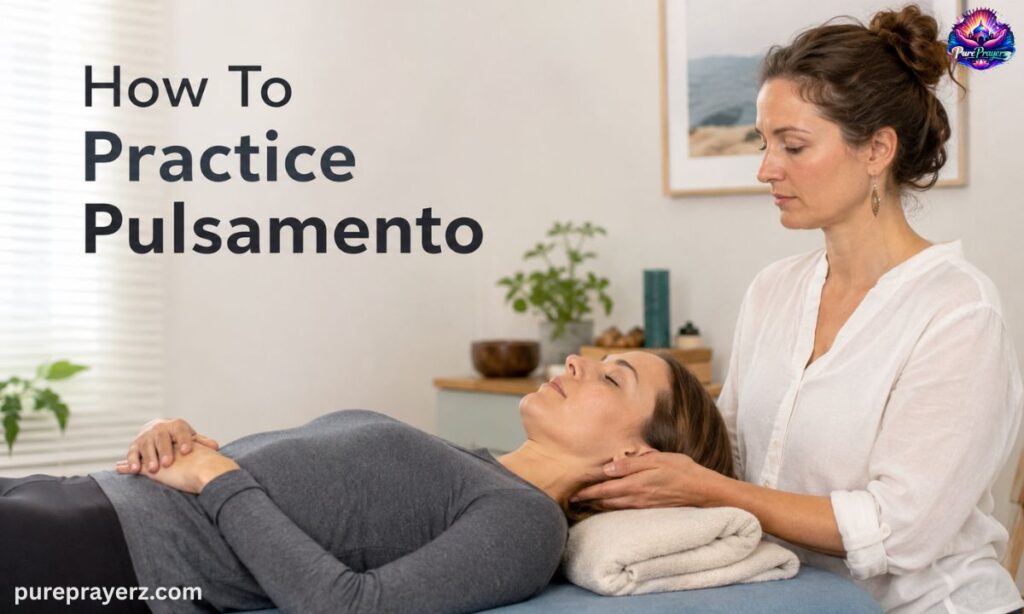
Practicing pulsamento begins with understanding a steady beat and developing awareness of a repeating rhythm. Start simple by clapping hands, foot tapping, and counting beats out loud to build a consistent beat. These basic rhythm exercises help improve musical timing and strengthen your connection to the underlying beat.
To go deeper, combine slow practice with breath awareness to align your natural pulse and breathing pattern. This supports better focus and concentration while keeping your nervous system calm. With regular practice and active listening, pulsament becomes a natural part of your daily routine and life rhythm.
Start with these basic steps:
- Count beats out loud to understand timing
- Use a metronome to maintain a steady beat
- Practice slow movements to build accuracy
- Clap hands or tap your foot to feel the rhythm
- Focus on breathing pattern while practicing
Slow practice is essential because it helps build muscle memory. Over time, your body naturally adapts to the rhythm.Consistency is key. Even a few minutes of daily practice can significantly improve your sense of timing and coordination.
Pulsamento Techniques
Mastering pulsamento requires developing a strong connection with a steady beat and repeating rhythm through simple, focused practice. Start by using clapping hands and foot tapping to physically feel the consistent beat, while counting beats out loud to improve musical timing. These basic rhythm exercises help your brain understand the underlying beat and build accurate pattern recognition over time.
Another effective approach is combining breath awareness with movement pattern training to align your natural pulse with rhythm. Practice slow, controlled exercises to strengthen muscle memory and improve flow and timing without rushing. Active listening also plays a key role pay attention to tempo, beat, and rhythmic patterns in music to sharpen your sense of pulsameno and create better harmonic balance.
Here are some effective techniques:
- Active listening: Pay close attention to beats in music
- Breath awareness: Sync breathing with rhythm
- Movement pattern training: Use body movements to feel rhythm
- Rhythm exercises: Practice repeating patterns regularly
- Flow and timing drills: Focus on smooth transitions
These techniques help create a strong connection between mind and body. Over time, pulsament becomes natural and effortless.
Common Mistakes In Pulsamento
Many beginners struggle with pulsamento because they rush the steady beat or lose track of the repeating rhythm. This often happens due to excitement, lack of focus, or skipping proper rhythm exercises like counting beats. As a result, the consistent beat becomes uneven, affecting musical timing and overall flow.
Another common issue is ignoring the breathing pattern while focusing only on sound and movement. This disconnect can disturb the natural pulse, making it harder to maintain inner calm and coordination. Practicing in a calm space, using slow practice, and combining breath awareness can help correct these mistakes effectively.
Here is a clear breakdown:
| Mistake | Why It Happens | How To Fix It |
| Rushing the beat | Excitement or nervousness | Start slower and build gradually |
| Losing focus | Distraction or boredom | Practice in a quiet and calm space |
| Stopping too early | Lack of patience | Set a small daily practice goal |
| Uneven timing | Lack of counting | Count beats out loud every time |
| Ignoring breath | Focusing only on sound | Combine breathing with rhythm practice |
Must Read: Tech Hacks PBLinuxGaming: Boost Linux Gaming Performance
Tips To Improve Pulsamento
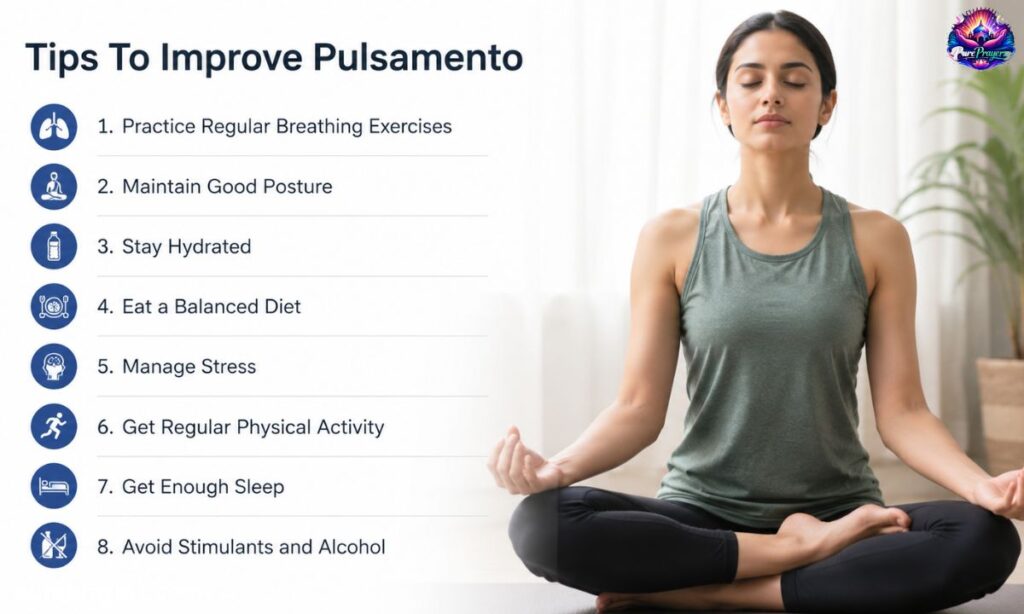
Improving pulsamento starts with building a strong connection to a steady beat and repeating rhythm. Focus on simple actions like counting beats, clapping hands, and foot tapping to develop a consistent beat. These small habits train your brain to recognize rhythmic patterns and improve musical timing naturally.
At the same time, bring awareness to your breathing pattern and natural pulse to support better flow and timing. When your mind stays calm, your nervous system aligns with the rhythm, leading to better focus and concentration. With regular practice, pulsament becomes part of your daily routine and life rhythm.
Here are 6 practical tips to improve pulsamento:
- Practice with a metronome to maintain a steady beat
- Start with slow practice to build strong muscle memory
- Use counting beats out loud for better timing accuracy
- Combine breath awareness with rhythm exercises
- Engage in active listening to understand underlying beat
- Stay consistent with short daily rhythm training sessions
Frequently Asked Questions
What is pulsamento?
Pulsamento is a steady beat or natural rhythm that creates flow and timing in music, body functions, and daily life patterns for balance. It represents an underlying rhythm that connects movement and consistency.
How does pulsamento affect music?
In music, pulsamento guides musical timing, tempo, and rhythmic patterns, helping musicians maintain a consistent beat using metronome, clapping hands, and rhythm exercises effectively.
Can pulsamento improve focus?
Yes, it improves focus and concentration by training the brain to follow steady rhythm, enhancing attention, mental clarity, and active listening skills in daily tasks.
Is pulsamento related to health?
Yes, it connects with heartbeat, breathing pattern, and nervous system, supporting relaxation, stress reduction, mindfulness, and emotional balance in a natural way.
How can I practice pulsamento daily?
You can practice by counting beats, slow practice, tapping feet, clapping hands, and combining breath awareness with simple rhythm training for better control.
Why is pulsamento important in life?
It creates structure and harmony in life rhythm, improving discipline, sleep quality, anxiety reduction, and alignment with natural daily patterns for better living.
Conclusion
Pulsamento is all about a steady beat in life. It helps you find balance in music, body, and daily routine. When you follow rhythm, you feel more calm and focused. It brings a natural flow to your thoughts and actions. Many people don’t realize how important this concept is for inner peace. But once you understand it, life starts feeling more organized and smooth. It also improves attention and mental clarity. It keeps your mind in a stable flow.
Practicing this rhythm every day makes a big difference. Pulsamento Simple habits like counting beats, slow breathing, and following timing can help. It builds better focus and reduces stress. It also supports better sleep and emotional balance. When you stay connected with it, your body and mind work together. This natural rhythm brings harmony in daily life. So keep practicing it and enjoy a more peaceful and balanced lifestyle.