
Jumma Rakat is an essential topic for every Muslim who wants to understand the correct structure of Friday prayer. Jummah is a weekly congregational prayer that replaces the regular Dhuhr prayer and holds special spiritual importance in Islamic prayer practices. This article explains how many rakats in jummah prayer, including the complete breakdown of sunnah rakats jummah, fardh units, and voluntary prayers in Islam.
It also explores differences in schools of fiqh, especially hanafi fiqh jummah rakats, along with guidance for both men and women. You will learn the total rakats friday prayer, proper method, hadith on jummah rakats, and practical friday salah guidance for home and masjid.
Jumma Rakat Detailed Quick Facts Table:
| Topic | Quick Facts |
| Total Rakats Friday Prayer | Approximately 14 rakats, combining sunnah, fardh, and optional nafl prayers |
| Fardh Jummah Prayer | 2 rakats, obligatory for men in congregation at the mosque |
| Sunnah Before Jummah | 4 rakats (4 sunnah before jummah), ghair muakkadah but highly recommended |
| Sunnah After Jummah | 4 sunnah muakkadah + 2 sunnah muakkadah, performed after fardh prayer |
| Nafl Prayer Jummah | Optional voluntary rakats, can be prayed before or after fardh and sunnah |
| Jummah for Women | Not obligatory; may pray Dhuhr at home (4 fardh) or join mosque congregation |
| Hanafi Fiqh Jummah Rakats | Emphasizes 4 sunnah before, 2 fardh, 4 sunnah muakkadah after, 2 sunnah muakkadah, plus optional nafl |
| Prophetic Basis | Abu Hurairah and Aishah narrations confirm sunnah and nafl prayers surrounding Jummah |
| Purpose | Spiritual preparation, fulfillment of obligation, reward multiplication, and community gathering |
| Pre and Post Jummah | Sunnah prayers before and after fardh enhance focus and increase spiritual reward |
Must Read: 24+ Powerful Offering Prayer: Blessings, Faith & Spiritual Growth
Number of Sunnah Rakat Before Jummah
The sunnah rakat before jummah are performed to prepare the worshipper spiritually for the Friday sermon and main prayer. Most scholars recommend praying 4 sunnah before jummah, which are considered ghair muakkadah meaning (non-emphasized but encouraged) in Islamic practice. These rakats help calm the mind and focus attention before the fardh prayer.
Performing these rakats individually or in congregation strengthens devotion and consistency in worship. They are an important part of pre and post jummah prayer and increase the reward of attending Jummah. Following this practice aligns with prophet muhammad jummah prayer teachings and enhances overall spiritual benefit.
4 Sunnah Before Jummah
The sunnah rakat before Jumma Rakat plays a key role in preparing for the Friday prayer. Most scholars recommend performing 4 sunnah before jummah to align with the Prophet Muhammad’s (ﷺ) practice. These rakats help worshippers focus and prepare mentally for the khutbah and fardh prayer.
Importance of Pre-Jummah Sunnah
These pre-prayer rakats are considered ghair muakkadah, meaning they are non-emphasized but highly encouraged. Performing them regularly increases spiritual reward and ensures readiness for the main prayer. It also strengthens the connection between voluntary prayers in Islam and the obligatory jummah prayer rakats.
How to Perform
Worshippers should pray these 4 rakats individually, preferably before the imam begins the sermon. Maintaining proper sequence and focus ensures the prayer aligns with authentic jummah salah guidance. These rakats are an essential part of pre and post jummah prayer practices.
Hadith on Jumma Rakat
The hadith on Jumma Rakats provide authentic guidance for performing Friday prayers correctly. Abu Hurairah reported that the Prophet Muhammad (ﷺ) said, “Whoever performs ablution well, then comes to Jummah prayer and listens attentively to the khutbah, his sins between that and the next Jummah will be forgiven.” This emphasizes the importance of attendance and focus during the sermon.
Aishah (RA) narrated that the Prophet regularly prayed sunnah before and after Jummah, highlighting the significance of voluntary prayers in Islam. Sahih Muslim also confirms that performing sunnah and nafl prayers around Jummah increases spiritual reward. Following these prophetic teachings ensures that the jummah prayer rakats are performed in line with authentic practice.
Abu Hurairah Hadith
Abu Hurairah (RA) reported the Prophet Muhammad (ﷺ) said:
“Whoever performs ablution well, then comes to Jummah prayer and listens attentively to the khutbah, his sins between that and the next Jummah will be forgiven.”
Reference: Sahih Muslim, Book 4, Hadith 854
This highlights the importance of attending the congregation and focusing during the sermon.
Aishah Narration
Aishah (RA) narrated that the Prophet (ﷺ) said:
“He who prays the sunnah before and after Jummah will earn greater reward and closeness to Allah.”
Reference: Sunan Abu Dawood, Book 7, Hadith 1052
Performing sunnah and nafl prayers around Jummah increases spiritual benefit and ensures the jummah prayer rakats are performed correctly.
Jummah Prayer Rakats for Ladies & Gents
The jummah prayer rakats differ slightly for men and women due to obligation rules in Islam. For men, attending the jummah congregation prayer in the mosque is obligatory, and they perform the full sequence, including 4 sunnah before jummah, 2 fardh jummah prayer, 4 sunnah muakkadah after jummah, 2 sunnah muakkadah, and optional nafl prayers. This structure ensures they fulfill both the compulsory and voluntary aspects of worship.
For women, Jummah prayer is not obligatory, and they can perform the Dhuhr prayer (4 fardh rakats) at home. If women choose to attend the mosque, they can follow the same sequence as men. This flexibility allows both men and women to maintain proper islamic prayer practices, ensuring spiritual rewards while accommodating their circumstances.
For Men
- Jummah is obligatory
- Must attend jummah congregation prayer in a mosque
- Perform full rakah count jummah including fardh
For Women
- Jummah is not obligatory
- They can pray Dhuhr (4 fardh) at home
- If attending mosque, they can join Jummah prayer
Summary Table
| Category | Prayer Type | Rakats |
| Men | Jummah | 2 fardh + sunnah + nafl |
| Women | At Home | 4 fardh (Dhuhr) |
| Women | At Mosque | Same as Jummah |
Explanation
This flexibility reflects ease in islamic prayer practices, ensuring that both men and women can fulfill their obligations comfortably.
Jumma Namaz Rakat Photo (Explanation)
While many search for a jumma namaz rakat photo, understanding the structure of Jummah prayer is more important than visuals. The prayer is divided into three main phases: before the khutbah, during the fardh prayer, and after the prayer for sunnah and nafl units. Visualizing these phases mentally helps beginners follow the sequence correctly and perform jummah prayer rakats with confidence.
To simplify, think of the Jummah prayer as a step-by-step process:
- Pre-prayer: 4 sunnah rakat before the khutbah
- Main prayer: 2 fardh jummah prayer in congregation
- Post-prayer: 4 sunnah muakkadah + 2 sunnah muakkadah + optional nafl
- Maintain focus and proper sequence for maximum reward
This mental framework replaces the need for a static photo while helping worshippers perform each rakat correctly. Understanding the rakah count jummah ensures proper adherence to Islamic prayer practices.
Must Read: 65+ Sunday Morning Prayer for My Love to Bless His Heart
Jumma Rakats Hanafi & Sunni
The Hanafi and Sunni schools of thought largely agree on the structure of jumma rakat with minor differences in voluntary prayers. Hanafi fiqh emphasizes 4 sunnah before Jummah, 2 fardh jummah prayer, followed by 4 sunnah muakkadah and 2 sunnah muakkadah after the fardh. Optional nafl prayers can be added for extra reward.
Sunni practice is similar, focusing on pre and post Jummah prayers and following the Prophet’s guidance. Both schools prioritize performing the 2 fardh jummah prayer in congregation. Understanding these variations ensures proper adherence to friday salah guidance and Islamic prayer practices.
Jummah Rakat Comparison Table
| School | Before Jummah | Fardh | After Jummah | Optional Nafl |
| Hanafi | 4 sunnah | 2 | 6 (4+2) | Yes |
| Sunni | 4 sunnah | 2 | 6 (4+2) | Yes |
How Many Rakats in Jummah Prayer at Home
For those unable to attend the mosque, jumma rakat cannot be performed individually at home in the usual way. Instead, Muslims pray the regular Dhuhr prayer, which consists of 4 fardh rakats, along with additional sunnah and nafl prayers if desired. This ensures that the spirit of Jummah is observed even without the congregation.
At home, a recommended approach includes 4 fardh (Dhuhr), 2 or 4 sunnah before or after, and optional nafl prayers. While this differs from the full mosque structure, it still fulfills the essential duties. Practicing pre and post jummah prayer at home helps maintain consistency and spiritual focus during Friday worship.
How Many Rakats in Jummah Prayer at Masjid
When performed at the masjid, Jummah prayer follows the complete and traditional structure. It begins with 4 sunnah rakat before the khutbah, followed by the 2 fardh jummah prayer performed in congregation behind the imam. After the fardh, worshippers complete 4 sunnah muakkadah, 2 sunnah muakkadah, and optional nafl prayers.
This sequence brings the total rakats friday prayer to approximately 14 rakats, combining both obligatory and voluntary units. Performing Jummah in the mosque not only fulfills the obligation but also strengthens community bonds and enhances spiritual rewards.
Masjid Structure
- 4 sunnah before jummah
- Khutbah (sermon)
- 2 fardh jummah prayer
- 4 sunnah muakkadah after jummah
- 2 sunnah muakkadah
- Optional nafl
How to Pray Jummah
To pray Jummah correctly, start by performing wudu (ablution) and then offer the 4 sunnah rakat before the khutbah. Listen attentively to the imam during the khutbah, maintaining focus and silence throughout. After the sermon, pray the 2 fardh jummah prayer in congregation behind the imam.
Once the fardh prayer is complete, continue with 4 sunnah muakkadah after jummah, followed by 2 sunnah muakkadah and optional nafl prayers. This structured approach ensures that all jummah prayer rakats are performed properly. Following this sequence strengthens devotion and aligns with authentic Islamic prayer practices.
Step-by-Step Guide
To perform Jummah Jumma Rakat prayer correctly, start with wudu (ablution) and pray the 4 sunnah rakat before Jummah. Then listen attentively to the khutbah and follow the imam in 2 fardh jummah prayer. Afterward, complete the 4 sunnah muakkadah, 2 sunnah muakkadah, and optional nafl prayers to finish the jummah prayer rakats properly.
- Perform wudu (ablution)
- Pray sunnah rakat before jummah
- Listen to khutbah silently
- Pray 2 fardh jummah prayer behind imam
- Complete sunnah and nafl afterward
Key Rules
During Jummah prayer, it is essential to maintain focus and avoid talking, especially during the khutbah. Always follow the imam closely while performing the 2 fardh jummah prayer. Observing these jummah prayer rakats rules ensures your prayer is valid and spiritually rewarding.
- No talking during khutbah
- Follow imam precisely
- Maintain focus
Practical Tips
Arrive early for Jummah prayer to secure a good spot and focus on the khutbah without distraction. Maintain silence and follow the imam carefully during the prayer. Performing sunnah and nafl prayers before and after enhances the spiritual reward of jummah prayer rakats.
- Arrive early
- Sit close to imam
- Make dua after prayer
This method ensures proper friday salah guidance.
Jummah Namaz Rakat
The Jumma Rakat refers to the complete cycle of prayers performed specifically on Friday, replacing the regular Dhuhr prayer. It includes a combination of Sunnah and Fardh rakats, along with optional Nafl prayers. Performing these rakats correctly ensures that the spiritual and communal benefits of Jummah are fully realized. Each part of the prayer has a purpose, from preparing the mind during the sunnah before Jummah to seeking closeness to Allah after the main fardh rakats.
Typically, the structure includes 4 sunnah rakat before Jummah, 2 fardh jummah prayer in congregation, and 4 sunnah muakkadah after Jummah. Some traditions add 2 sunnah muakkadah and optional 2 nafl prayer Jummah, totaling approximately 14 rakats Friday prayer. Understanding and following this structure aligns with prophetic guidance and authentic hadith on Jummah rakats. Correct performance strengthens faith, increases reward, and enhances the spiritual experience of the weekly Friday congregation.
Must Read: Powerful Prayer for New Week: Boost Faith & Start Strong
Namaz Rakat (General Understanding)
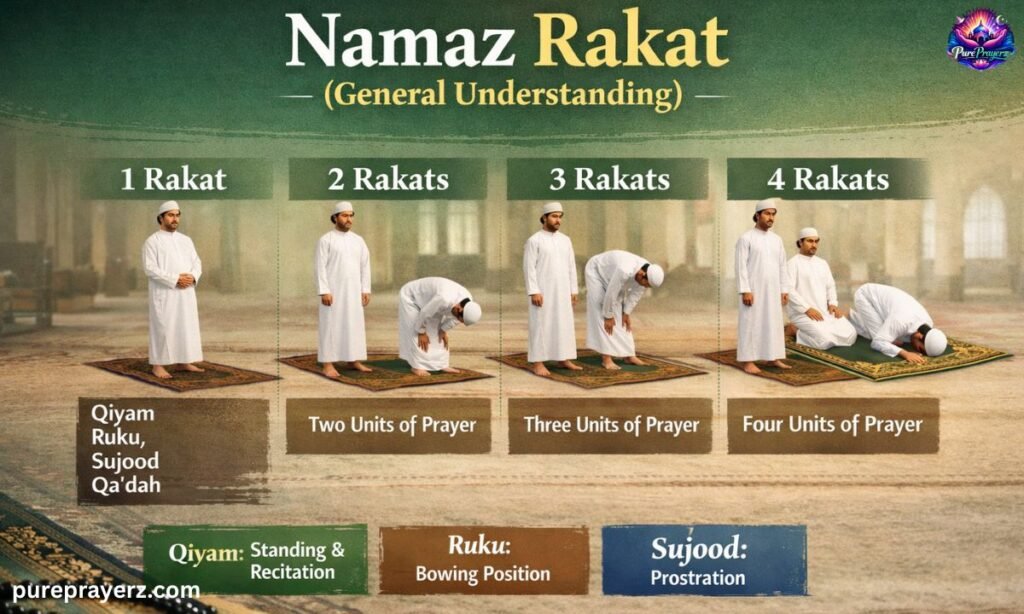
A namaz rakat is a complete unit of prayer that combines standing (Qiyam), bowing (Ruku), and prostration (Sujood). Each prayer consists of multiple rakats, which together form the full structure of daily and Friday prayers. Jumma Rakat Understanding the concept of rakats ensures that every namaz is performed properly and with devotion.
Rakats are categorized into Fardh (obligatory), Sunnah (Prophet’s practice), and Nafl (voluntary prayers in Islam). Performing them correctly strengthens spiritual discipline and consistency in worship, while following the proper jummah prayer rakats helps Muslims fulfill both their obligatory and voluntary prayer duties.
What is a Rakat?
A rakat is a single unit of Islamic prayer that includes standing (Qiyam), bowing (Ruku), and two prostrations (Sujood).Each namaz is made up of multiple rakats, forming the complete structure of daily and Friday prayers.Understanding a rakat helps in correctly performing jummah prayer rakats and all Islamic prayer practices.
A rakat is one unit of prayer consisting of:
- Standing (Qiyam)
- Bowing (Ruku)
- Prostration (Sujood)
Types of Rakats
In Islamic prayer, rakats are divided into different types based on their importance and obligation.The main types include Fardh (obligatory), Sunnah (practice of the Prophet), and Nafl (voluntary prayers in Islam).Understanding these types helps in performing Jumma Rakat correctly and following proper Islamic prayer practices.
- Fardh (obligatory)
- Sunnah (prophetic practice)
- Nafl (voluntary prayers in islam)
Why Rakats Matter
Jumma Rakat provide structure and rhythm to every Islamic prayer, ensuring it is performed correctly.They help maintain focus, discipline, and spiritual connection with Allah during worship.Performing the correct jummah prayer rakats maximizes reward and fulfills both obligatory and voluntary aspects of prayer.
They provide:
- Structure to prayer
- Consistency in worship
- Spiritual discipline
Frequently Asked Questions
How many rakats are in Jummah prayer?
Jummah prayer includes 4 sunnah before, 2 fardh in congregation, 4 sunnah muakkadah after, 2 sunnah muakkadah, plus optional nafl, totaling around 14 rakats.
What are the sunnah rakats before Jummah?
Before Jummah, it is recommended to pray 4 sunnah rakats. These are ghair muakkadah (non-emphasized) but spiritually rewarding for focus and preparation.
How many rakats are fardh in Jummah prayer?
The fardh portion of Jummah prayer is 2 rakats, performed in congregation at the mosque. It is obligatory for men and highly encouraged for women.
How many rakats are after Jummah prayer?
After the 2 fardh rakats, perform 4 sunnah muakkadah, 2 sunnah muakkadah, and optional nafl prayers to complete jummah prayer rakats fully.
How many rakats should women pray for Jummah?
Women may pray Dhuhr at home (4 fardh) or attend the mosque, following the same sequence as men, though Jummah is not obligatory for them.
Can Jummah prayer be performed at home?
Jummah cannot replace Dhuhr prayer at home. Instead, pray 4 fardh (Dhuhr) with optional sunnah and nafl, observing spiritual focus and devotion.
What is the total number of rakats on Friday prayer?
Including pre and post sunnah, fardh, and optional nafl, the total rakats friday prayer usually equals 14 rakats, combining obligation and voluntary prayers.
Conclusion
Understanding Jumma Rakat is essential for performing Friday prayer correctly and gaining its full spiritual benefits. From the 2 fardh jummah prayer to the various sunnah rakats jummah and nafl prayer jummah, each part plays a meaningful role in Islamic worship. While there are minor differences across schools of fiqh, the core structure remains consistent and rooted in authentic hadith on jummah rakats.
Whether praying at the Jumma Rakat mosque or at home, knowing the correct rakah count jummah helps ensure your عبادت is valid and rewarding. By following proper friday salah guidance, you can strengthen your connection with Allah and make Jummah a powerful weekly spiritual experience.