
I kept struggling every time I tried to get my emulator working properly, and nothing felt smooth or stable. I just wanted a simple set up for pblemulator, but instead I kept running into errors, lag, and confusing settings. Even when I searched how to set up pblemulator, most guides felt too technical or unclear for beginners like me.
In this blog, you’ll finally get a clear and simple breakdown of everything you need to get it working the right way. From installation to graphics, controls, and performance tuning, everything is explained step by step. If you’ve been looking for a stress-free set up for pblemulator, this guide will help you build a smooth and stable setup without confusion.
What To Know Before You Start
Before setting up PBLEmulator, it is important to understand how emulator configuration depends heavily on your hardware and file organization. Modern hardware with strong single-core CPU performance and a dedicated GPU will always deliver smoother emulation speed compared to older systems. A clean slate installation also helps avoid conflicts caused by outdated default settings or broken configuration .ini file entries.
You should also prepare all required files before starting, including BIOS firmware, ROM files, ISO files, and a properly structured game files folder. Using a dedicated folder with correct directory mapping and subdirectories setup ensures the emulator can detect content properly. Keeping everything organized from the beginning prevents errors during launch and improves overall stability.
Must Read: Connectivity Issues HSSGamepad 2026 Fix Guide & Solutions
Anatomy Of A Config Failure
Most emulator problems happen because of poor setup decisions instead of weak hardware. Understanding common failures helps you avoid hours of troubleshooting.One of the biggest issues comes from mixing nightly builds with outdated plugins or configuration files. Nightly builds often contain experimental features that may conflict with old settings.Another major problem is incorrect subdirectories setup.
Common configuration mistakes include:
- Using incompatible GPU drivers
- Running wrong internal resolution settings
- Incorrect controller mapping
- Broken command-line arguments
- Audio driver conflicts
- Corrupted shader cache
- Using integrated graphics instead of dedicated GPU
Many performance complaints are actually caused by improper graphics backend selection. For example, Vulkan rendering backend may stutter initially because shader cache files are being created in real time.The OpenGL rendering backend is another common source of confusion. It offers excellent compatibility but relies heavily on CPU resources. If users attempt aggressive 4K upscaling on weaker systems, frame rate drops appear quickly
| Problem | Common Cause | Recommended Fix |
| Stuttering gameplay | Shader compilation | Build shader cache first |
| Audio crackling | Audio desync | Enable WASAPI exclusive mode |
| Controller delay | Low polling rate | Adjust input settings |
| Missing games | Incorrect directory mapping | Rebuild game files folder |
| Slow performance | Weak CPU | Lower internal resolution |
| Random crashes | Broken configuration .ini file | Start clean slate installation |
The Exact Set Up For PBLEmulator You Need
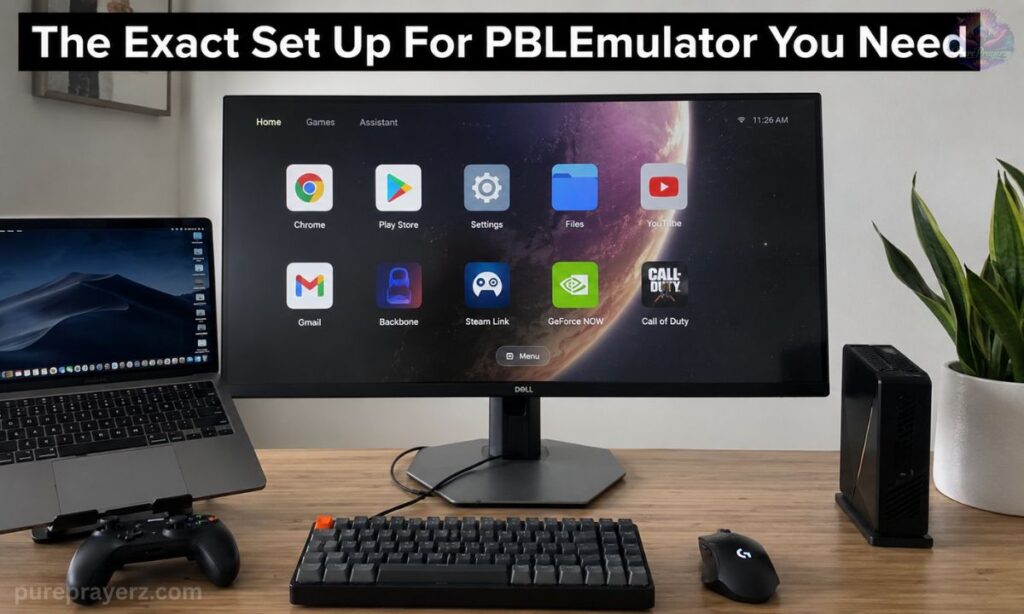
A proper set up for PBLEmulator starts with a clean slate installation to avoid old conflicts and broken settings. Always place the emulator in a dedicated folder and keep BIOS firmware, ROM files, and ISO files clearly separated for smooth directory mapping. This prevents errors during game loading and improves overall stability.
Next, focus on correct emulator configuration and default settings before making advanced changes. Modern hardware with a dedicated GPU or strong single-core CPU performance will handle higher internal resolution and shader cache building much better. Start simple, then optimize step by step for best results.
Recommended Setup Steps
- Install PBLEmulator in a dedicated folder (not system directories)
- Use clean slate installation with fresh configuration .ini file
- Organize BIOS firmware, ROM files, and save states separately
- Enable Vulkan rendering backend for modern dedicated GPU systems
Mapping Your Directories
Proper directory mapping is one of the most important steps in a stable PBLEmulator setup because it ensures the emulator can correctly locate BIOS firmware, ROM files, and ISO files without errors. A well-structured game files folder with clear subdirectories setup helps avoid missing content issues and keeps the emulator configuration clean and easy to manage. When everything is placed in a dedicated folder, the emulator runs more reliably and reduces scanning confusion during startup.
Incorrect directory mapping is one of the main reasons users face broken save states, failed launches, or missing memory card backup data. Keeping BIOS, saves, and shader cache files in properly labeled folders improves overall stability and makes troubleshooting much faster. A clean emulator configuration with organized directory mapping also supports smoother frontend launcher integration and better long-term maintenance.
Graphic Backends Compared
Choosing the right graphics backend in PBLEmulator directly impacts performance, stability, and visual quality. Vulkan rendering backend offers the best speed on modern GPUs, while OpenGL rendering backend provides wide compatibility for older or integrated graphics systems. Direct3D 11 acts as a balanced fallback, reducing shader compilation issues but offering slightly lower performance compared to Vulkan.
| Backend | Best Hardware Fit | Real-World Performance |
| Vulkan | Modern AMD and NVIDIA GPUs | Extremely fast with efficient GPU offloading |
| OpenGL | Legacy systems or integrated graphics | Stable compatibility but CPU intensive |
| Direct3D 11 | Windows fallback systems | Balanced compatibility with fewer stutters |
The Vulkan rendering backend is usually the best choice for modern hardware. It handles shader compilation efficiently and supports aggressive upscaling with strong frame pacing.However, first-launch shader cache building may create temporary stuttering. This is normal behavior.
The OpenGL rendering backend works well for compatibility-focused setups. It is especially useful for older GPUs and integrated graphics. However, OpenGL places more pressure on single-core CPU performance.Direct3D 11 remains useful for Windows systems that struggle with Vulkan driver stability. While slightly slower, it often avoids major shader cache issues.
Compiling The Shader Cache
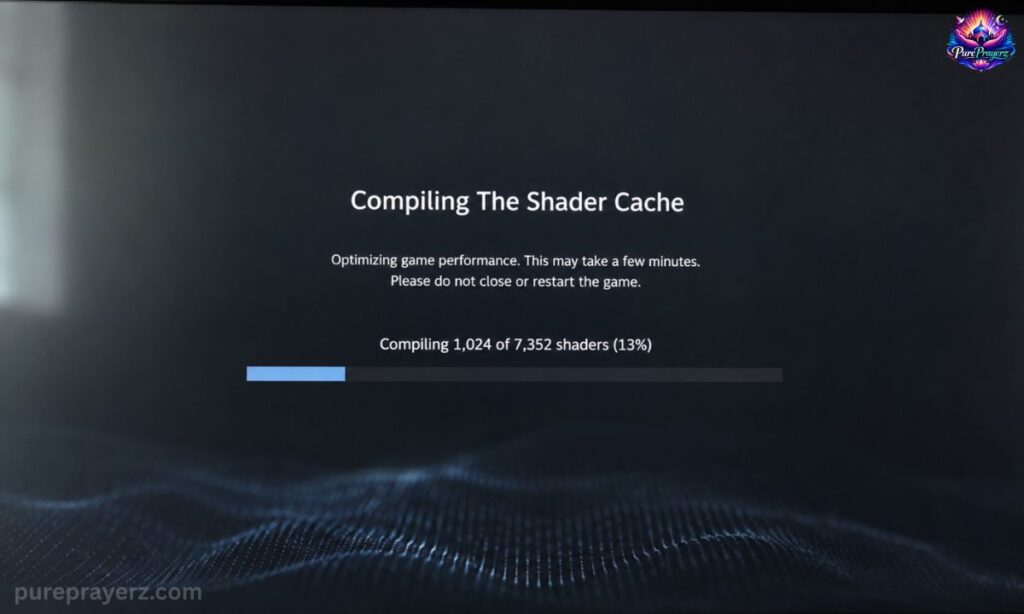
Shader compilation is one of the most misunderstood emulator features. Many users think their emulator is broken when stuttering appears during first-time gameplay.In reality, the emulator is building shader cache files in real time.Shaders control how graphics effects are rendered. Every new effect encountered during gameplay must compile before smooth playback becomes possible.
Best Practices For Shader Cache Management
- Store shader cache files on SATA SSD storage
- Avoid deleting cache folders unnecessarily
- Keep GPU drivers updated
- Use Vulkan rendering backend when possible
- Disable background applications during compilation
Some users also share prebuilt shader cache packages online. While convenient, they may create compatibility issues after software updates.CRT shaders and CRT filtering are also popular visual enhancements. These simulate retro television displays by adding scanlines and soft blur effects.However, CRT shaders slightly increase GPU load. Users with integrated graphics should use lightweight presets.
Beating Input Lag
Input lag is one of the biggest issues that can ruin smooth gameplay inside PBLEmulator. It happens when there is a delay between your controller input and on-screen response, often caused by poor polling rate settings, audio desync, or display buffering. Using a wired controller with XInput support or SDL2 mapping usually gives the fastest response time on modern systems.
To reduce latency, it is important to optimize both emulator and system settings together. Enabling fullscreen mode (-f), using WASAPI exclusive mode for audio, and keeping a stable frame pacing setup can significantly improve responsiveness. Lower analog stick deadzone settings also help achieve more precise movement and better control during gameplay.
- Use wired controllers for lower input latency
- Enable XInput or SDL2 for better controller mapping
- Increase polling rate for faster input response
- Disable unnecessary V-Sync if it adds delay
- Use WASAPI exclusive mode to reduce audio-related lag
Must Read: Tech Hacks PBLinuxGaming: Boost Linux Gaming Performance
Managing Save States And Memory Cards
Save states allow players to instantly pause and continue gameplay from any point inside PBLEmulator. They are useful for difficult games, testing emulator configuration changes, and avoiding repeated progress loss. However, save states can sometimes break after software updates or nightly builds.
Memory card backup files are more reliable because they work like original console saves and remain stable across different emulator versions. Users should keep backups inside a dedicated folder and organize them by game title for easier management. Regular backups protect important progress from corrupted files, failed updates, or accidental deletion.
Understanding Save States
Save states allow players to instantly save and load progress at any moment during gameplay. They are useful for difficult levels, testing emulator configuration changes, and reducing repeated gameplay sections. However, save states may become unstable after major software updates or when switching between nightly builds and stable release versions.
Protecting Memory Card Backups
Memory card backup files work more like original console saves and provide better long-term reliability. set up for pblemulator users should store backup copies inside a dedicated folder to avoid accidental deletion or corruption during emulator maintenance. Keeping organized save states and memory card backup files helps protect progress and improves overall PBLEmulator stability.
Frontend Integration
Frontend integration helps organize PBLEmulator into a clean and user-friendly gaming library. A frontend launcher allows users to browse games through a visual box art interface instead of opening the executable file manually every time. This setup creates a console-like experience that feels faster and more professional. It also simplifies launching multiple emulators from one central location.
Most frontend launcher systems support custom command-line arguments and fullscreen mode (-f) for automatic startup settings. set up for pblemulator proper directory mapping is important because the launcher must correctly detect ROM files, BIOS firmware, and save states. Users should keep a dedicated folder structure to avoid scanning errors and broken launch parameters. A well-configured frontend setup improves accessibility, navigation speed, and overall emulator configuration management.
Frontend launchers provide:
- Box art interface
- Automatic metadata scraping
- Controller-friendly navigation
- Unified emulator libraries
- Launch parameters management
Scaling And Visual Clarity
Scaling settings play a major role in how sharp and smooth games look inside PBLEmulator. Increasing the internal resolution improves texture quality, reduces jagged edges, and makes older titles look cleaner on modern displays. Users with a dedicated GPU can usually handle higher upscaling values without hurting emulation speed.
Visual filters like CRT shaders and CRT filtering can recreate the appearance of classic retro televisions for a more authentic gaming feel. set up for pblemulator however, aggressive 4K upscaling may reduce frame rate on systems using integrated graphics or weaker hardware. The best results come from balancing visual clarity, stable frame pacing, and overall performance.
Recommended Internal Resolution Targets
| Hardware Type | Recommended Resolution |
| Integrated Graphics | Native to 2x |
| Mid-Range GPU | 3x to 4x |
| High-End Dedicated GPU | 6x to 8x |
CRT shaders recreate retro television appearance with scanlines and glow effects. Some players prefer sharp modern visuals while others enjoy authentic retro presentation.Frame pacing matters just as much as resolution quality. Inconsistent frame delivery creates visible stutter even when frame rate appears high.
System Updates And Maintenance
Keeping PBLEmulator updated is important for stable emulation speed and better compatibility with modern hardware. New software updates often improve frame pacing, shader compilation, and GPU offloading performance. set up for pblemulator updated GPU drivers can also fix Vulkan rendering backend issues and reduce random crashes during gameplay.
Users should always back up save states, memory card backup files, and the configuration .ini file before installing nightly builds or a new stable release. Regular maintenance helps prevent audio desync, broken controller mapping, and corrupted shader cache problems. A clean and organized emulator configuration also improves long-term reliability.
- Update GPU drivers regularly for better frame rate stability
- Backup save states and memory card backup files weekly
- Test stable release versions before using nightly builds
- Clear corrupted shader cache files if games begin stuttering
- Keep BIOS firmware and game files folder properly organized
Must Rad: TheLaptopAdviser Expert Gaming Laptop Review Guide 2026
Wrapping Up The Build
Creating the perfect set up for pblemulator is not just about installing software. It involves balancing hardware power, emulator configuration, graphics backend selection, controller responsiveness, and long-term maintenance.A successful setup begins with a clean slate installation and organized directory mapping. From there, selecting the correct rendering backend becomes critical.
Vulkan rendering backend usually delivers the best modern performance, while OpenGL rendering backend and Direct3D 11 remain valuable alternatives for compatibility-focused systems.Proper shader cache management improves frame pacing over time, while careful controller mapping reduces input lag and enhances responsiveness. Set up for pblemulator features like CRT shaders, 4K upscaling, and advanced upscaling options can dramatically improve visual quality when paired with modern hardware.
Long-term success also depends on protecting memory card backup files, organizing ROM files correctly, and managing software updates carefully. set up for pblemulator users who maintain stable release installations alongside experimental nightly builds gain both reliability and flexibility.By following this complete guide, you can build a fast, stable, visually impressive PBLEmulator environment that performs smoothly across modern gaming systems in 2026.
Frequently Asked Questions
What is the best way to start set up for pblemulator?
The best way is to use a clean slate installation, organize BIOS firmware, ROM files, and configure emulator settings step by step.
Which graphics backend is best for performance in PBLEmulator?
Vulkan rendering backend is best for modern GPUs, offering fast performance and GPU offloading, while OpenGL and Direct3D 11 are fallback options.
How can I reduce input lag in PBLEmulator?
Use wired controllers, enable XInput or SDL2, increase polling rate, and activate WASAPI exclusive mode to reduce input latency effectively.
Why is shader cache important in PBLEmulator setup?
Shader cache improves performance by storing compiled shaders, reducing stuttering and improving frame pacing after initial gameplay loading.
How should I organize game files for PBLEmulator?
Keep ROM files, ISO files, BIOS firmware, and save states in dedicated folders with proper directory mapping for smooth detection and management.
Conclusion
A proper set up for pblemulator makes a huge difference in performance and stability. Many users struggle because they miss simple steps in the set up for pblemulator process. If you follow the correct guide, everything becomes smooth and easy. A clean and simple set up for pblemulator helps reduce lag, fix errors, and improve gameplay. Always remember that how to set up pblemulator is not hard when you follow the right steps in order.
A good set up for pblemulator also depends on correct folders, graphics settings, and controller setup. When you understand how to set up pblemulator, you avoid common mistakes. Keep your files organized and use the right backend for your system. A stable set up for pblemulator gives better speed, clear graphics, and less input delay. Follow the basics, and your experience will be smooth and enjoyable every time.