
In today’s fast-evolving digital ecosystem, software quality is no longer optional it is essential. This comprehensive guide explores testing stonecap3.0.34 software, focusing on its capabilities, testing methodologies, and performance insights. You will learn how to conduct effective software testing, ensure software reliability, and achieve accurate quality validation through structured approaches.
From setting up a proper test environment to analyzing test results, this article breaks down every step in a clear and practical way. Whether you’re a developer, QA engineer, or business owner, understanding how to optimize test execution, detect defects, and improve overall software evaluation will help you maximize efficiency and ensure a seamless user experience.
What is Testing StoneCap3.0.34 Software?

Testing StoneCap3.0.34 software refers to the structured process of evaluating the application’s functionality, performance, and stability under different conditions. It involves multiple layers of software testing, including functional testing, performance testing, and security testing, to ensure the system meets expected standards.At its core, this process focuses on software reliability and defect detection.
By simulating real-world scenarios, testers can identify potential glitches, errors, or compatibility issues before deployment. This ensures that the software performs efficiently across various environments.The testing process also includes software performance testing, where metrics like CPU usage, RAM usage, throughput, and latency margins are analyzed.
These metrics help determine how well the system handles workloads, especially when dealing with large datasets handling or concurrent users.Additionally, testing StoneCap3.0.34 software involves detailed test results analysis and test documentation. This ensures that every issue is tracked, reported, and resolved effectively. The goal is not just to find bugs but to enhance overall software evaluation and deliver a polished product.
What You Will Learn in This Guide
This guide is designed to provide a complete understanding of testing StoneCap3.0.34 software from both technical and practical perspectives. It goes beyond basic explanations and dives into real-world applications and advanced strategies.You will learn how to properly set up a test environment, including hardware requirements, software requirements, and necessary tools.
Understanding the installation process and ensuring correct setup is crucial for accurate test execution.The guide also explains various testing methodologies such as unit testing, integration testing, user acceptance testing, and parallel run simulations. Each method plays a unique role in ensuring the system performs as expected.Additionally, you will gain insights into workflow optimization and process automation.
This includes integrating the software into a CI/CD pipeline, enabling better team collaboration, and improving version control through Git integration.Finally, the article covers performance insights, issue resolution, and best practices for efficient testing. By the end, you will have a clear roadmap for achieving high-quality software testing and long-term system stability.
Must Read: Set Up For PBLEmulator Guide: Complete Easy Setup Tips
Key Features of StoneCap3.0.34 Software
StoneCap3.0.34 software comes equipped with powerful features designed to streamline software testing and enhance overall efficiency. Its core capabilities include advanced data analytics, comprehensive reporting tools, and support for automated reports in multiple formats like HTML export, CSV export, and PDF export. These tools enable precise test results analysis and facilitate better defect identification.
Additionally, the software supports workflow optimization and process automation, integrating seamlessly with CI/CD pipelines, Git integration, and cloud environments. Its compatibility with VM emulation, container emulation, and native environments ensures accurate cross-platform testing. Together, these features improve software reliability, simplify test execution, and make quality validation faster and more effective.
Core Functionalities
StoneCap3.0.34 software offers a wide range of features designed to simplify software testing and improve efficiency. One of its primary strengths lies in its ability to handle complex test execution scenarios with precision.The software includes advanced data analytics capabilities that allow testers to analyze performance logs and test logs in real time. This helps in identifying patterns, detecting anomalies, and improving defect identification processes.
Another important functionality is its support for automated reports. Users can generate reports in multiple formats such as HTML export, CSV export, and PDF export. These reporting tools make it easier to share insights with stakeholders and maintain proper test documentation.Additionally, the platform supports cloud integration, enabling teams to run tests in scalable environments. This is especially useful for organizations dealing with large datasets handling or distributed systems.
Unique Selling Points
StoneCap3.0.34 stands out due to its focus on workflow optimization and process automation. It integrates seamlessly with modern development pipelines, including CI/CD pipeline and agile pipeline systems.Its dashboard tools and visual reporting features provide a clear overview of performance insights. These dashboards help teams monitor pass/fail rates, error detection, and overall system health in real time.
Another unique aspect is its compatibility with multiple environments, including VM emulation, container emulation, and native environments. This ensures accurate cross-platform testing and better compatibility testing outcomes.Finally, its ability to support team collaboration and version control makes it ideal for modern development teams. With automated tagging and structured test case organization, it simplifies complex testing workflows.
Must Read: When Hondingo88 Patches PC Ultimate Update Timeline Guide
Preparing for StoneCap3.0.34 Software Testing

Proper preparation is critical to ensure effective testing of StoneCap3.0.34 software. This begins with verifying system requirements, including hardware requirements, software requirements, and operating system support. Ensuring that the test environment is properly configured prevents compatibility issues and installation errors during test execution.
Next, it is essential to install the software correctly using the installation wizard and apply any necessary software updates or patch management. Performing a complete data backup before testing safeguards existing information, while setting up the test environment with recommended tools and plugins ensures smooth, efficient, and reliable testing.
Verify System Requirements
Before starting the testing process, it is essential to verify all system requirements. This includes checking hardware requirements such as processor speed, memory capacity, and storage availability.
Ensuring proper operating system support is equally important. The software should be compatible with your existing environment to avoid compatibility issues during testing.
Install the Software Correctly
The installation process plays a critical role in successful testing. Using the installation wizard, follow each step carefully to ensure proper setup. Make sure you have admin rights to avoid installation errors.
It is also recommended to check for software updates and apply patch management strategies. Keeping the system updated helps prevent integration failures and ensures smoother operation.
Backup Existing Data
Before initiating any test setup, always perform a data backup. This protects your existing data from potential loss during testing.
Backing up data also allows you to restore the system to its original state if any issues arise. This step is crucial for maintaining data integrity and ensuring safe testing practices.
Setting Up the Testing Environment
Setting up the testing environment is a critical step to ensure accurate and reliable results when testing StoneCap3.0.34 software. This involves configuring hardware and software requirements, preparing the operating system, and creating a stable environment for functional, performance, and compatibility testing. A well-prepared environment reduces the risk of errors and improves the accuracy of test execution.
Recommended tools and plugins, such as debugging tools, monitoring tools, and automation utilities, enhance the efficiency of testing. Proper setup also includes VM emulation, container emulation, or native environment configuration to replicate real-world scenarios. This ensures thorough software evaluation and reliable defect detection across all test cases.
Hardware & Software Requirements
A well-configured test environment is essential for accurate results. The environment should meet all hardware requirements and software requirements specified by StoneCap3.0.34.
This includes sufficient CPU usage capacity, adequate RAM usage, and stable network connectivity. These factors directly impact performance testing and overall test execution.
Recommended Tools & Plugins
Using the right tools and plugins enhances the efficiency and accuracy of testing StoneCap3.0.34 software. Debugging tools, monitoring utilities, and automation plugins help track performance logs, detect errors, and optimize test execution.
These tools also support process automation, workflow optimization, and detailed test documentation. By integrating them into the test environment, teams can improve defect detection, streamline test case organization, and ensure consistent software evaluation.
Common tools used in testing environments include:
- Debugging tools for identifying software bugs
- Monitoring tools for tracking performance logs
- Automation tools for process automation
These tools improve test results analysis and make the testing process more efficient.
Testing Methodologies for StoneCap3.0.34
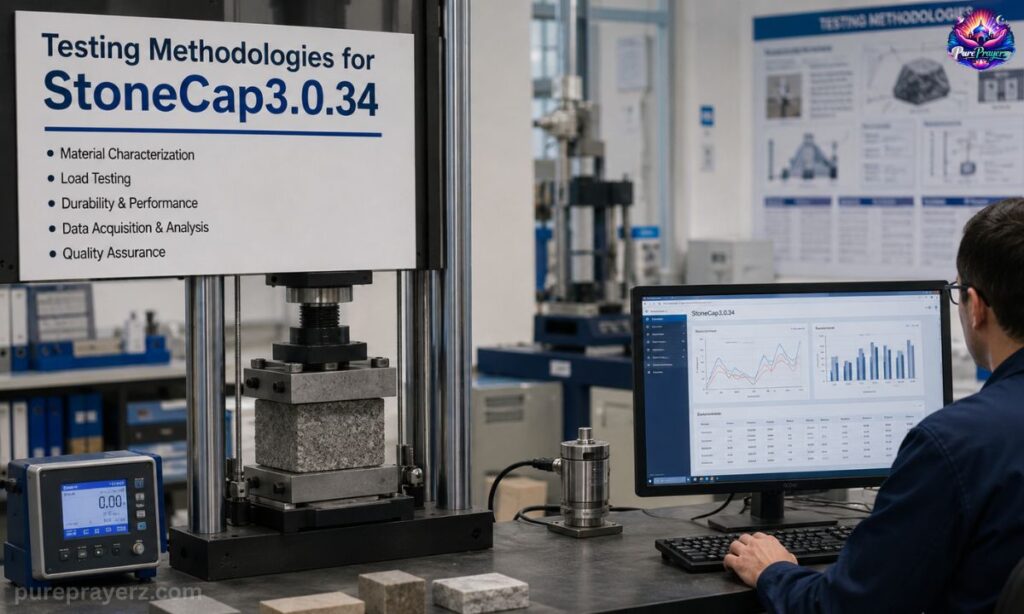
Testing methodologies for StoneCap3.0.34 provide a structured approach to evaluate software performance, reliability, and usability. These methods include functional testing, performance testing, security testing, and compatibility testing to ensure comprehensive quality validation.
By applying unit testing, integration testing, user acceptance testing, and parallel run simulations, teams can identify defects, analyze test results, and optimize workflows. This systematic approach ensures accurate test execution and improves overall software evaluation.
Functional Testing
Functional testing focuses on verifying that each feature of StoneCap3.0.34 software works as intended according to the defined specifications. It evaluates inputs, outputs, and system behavior to ensure that all functions perform correctly under different conditions.
This testing methodology helps detect software bugs, glitches, and integration failures early in the development cycle. By systematically validating core functionalities, teams can ensure software reliability, improve defect detection, and deliver a seamless user experience.
Performance Testing
Performance testing evaluates how StoneCap3.0.34 software behaves under different workloads and stress conditions. Key metrics include CPU usage, RAM usage, throughput, and latency margins, which help identify bottlenecks and optimize overall software performance.
This type of testing also involves monitoring performance logs and test logs to ensure the system maintains stability during high-demand scenarios. By analyzing these results, teams can improve software reliability, enhance user experience, and ensure that the application meets expected performance standards.
Key metrics include:
- Throughput
- Latency margins
- CPU usage
- RAM usage
This helps identify bottlenecks and optimize performance.
Compatibility Testing
Compatibility testing ensures that StoneCap3.0.34 software performs consistently across different operating systems, devices, browsers, and environments. It helps identify issues that may arise due to varying hardware configurations, software versions, or system settings.
This testing includes cross-platform testing, VM emulation, and container emulation to simulate real-world usage scenarios. By detecting compatibility issues early, teams can improve software reliability, prevent crashes, and ensure a seamless experience for all users.
Security Testing
Security testing evaluates StoneCap3.0.34 software for vulnerabilities, ensuring that data and system resources remain protected from unauthorized access or breaches. It includes testing for encryption effectiveness, authentication protocols, and potential loopholes in the software architecture.
Regular security testing helps identify weaknesses before deployment, reducing the risk of cyberattacks and compliance issues. By integrating security checks into the test environment, teams can maintain software reliability and protect sensitive data across all supported operating systems and platforms.
Usability Testing
Usability testing evaluates how easily end users can interact with the software and whether the interface is intuitive and user-friendly. It focuses on user experience, navigation, and accessibility to ensure the software meets real-world needs.
This testing helps identify design flaws, confusing workflows, or features that may hinder productivity. By addressing these issues early, teams can enhance software reliability, improve user satisfaction, and ensure that the application performs efficiently in diverse environments.
Streamlined Test Management
Streamlined test management ensures that all test cases, schedules, and results are organized efficiently for maximum productivity. Proper test setup and automated tagging simplify tracking and reduce the risk of errors during test execution.
By using structured workflows and scheduling tools, teams can monitor progress, prioritize critical tasks, and maintain comprehensive test documentation. This approach enhances collaboration, improves software evaluation, and supports better defect detection throughout the testing process.
Organizing Test Cases
Organizing test cases effectively ensures efficient test execution and easier tracking of results. Proper categorization and automated tagging help teams quickly identify which tests to run for specific features or modules.
Structured test case organization also supports better documentation and streamlined workflows. It reduces the risk of missing critical scenarios and enhances overall software reliability during testing StoneCap3.0.34 software.
Scheduling and Tracking
Scheduling and tracking ensure that all test cases are executed on time and progress is monitored efficiently. Proper scheduling helps avoid delays, while tracking provides visibility into test execution and defect resolution.
Using automated tools for scheduling and tracking improves workflow optimization. It allows teams to maintain organized test case management, monitor pass/fail rates, and ensure timely completion of the software testing process.
Must Read: Graphic Design Ideas Generator GFXDigitational: Creative Tips
Reporting That Actually Helps

Effective reporting goes beyond simply documenting test results it provides actionable insights that guide decision-making and improve software quality. By combining metrics tracking, visual reports, and dashboards, teams can clearly see trends, detect defects, and understand overall software performance. This approach ensures that reports are meaningful, not just a collection of raw data.
Well-structured reporting tools allow automated generation of test documentation in formats like HTML export, CSV export, and PDF export. These reports support workflow optimization, team collaboration, and process automation, making it easier for stakeholders to evaluate software reliability, review defect detection outcomes, and plan future improvements.
Metrics to Track
Tracking the right metrics is crucial for effective software testing and accurate performance evaluation. Key metrics include pass/fail rates, error detection counts, defect identification, CPU usage, RAM usage, throughput, and latency margins. Monitoring these indicators helps ensure that the software meets expected reliability and performance standards.
Additionally, maintaining detailed performance logs and test logs allows teams to analyze trends over time, identify recurring issues, and validate software optimizations. By focusing on these metrics, testers can make data-driven decisions, improve test execution, and enhance overall software quality and stability.
Tracking the right metrics is essential for meaningful insights. Important metrics include:
- Pass/fail rates
- Error detection
- Defect identification
- Performance logs
Visual Reports and Dashboards
Visual reports and dashboards provide a clear and interactive way to understand test results and performance metrics. They transform raw data from test logs, defect identification, and error detection into easily interpretable charts, graphs, and tables. This helps teams quickly identify patterns, track pass/fail rates, and monitor software reliability in real time.
By using dashboard tools and reporting tools, testers can generate automated reports in multiple formats such as HTML export, CSV export, or PDF export. These visual insights improve decision-making, enhance workflow optimization, and ensure that stakeholders receive actionable performance insights without sifting through extensive raw data.
Common Issues and How to Fix Them
When testing StoneCap3.0.34 software, several common issues can arise that affect performance, functionality, and reliability. These include installation errors, software bugs, glitches, and compatibility issues across different operating systems or devices. Identifying these problems early is essential for maintaining smooth test execution and ensuring accurate software evaluation.
Fixing these issues requires a structured approach, including using debugging tools, reviewing test logs, and performing regular software updates. Proper test documentation, cross-platform testing, and following best practices for setup and environment configuration help resolve problems efficiently, ensuring reliable and high-quality software performance.
Installation Problems
Installation problems arise when the software fails to set up correctly on a system, often due to missing admin rights, incorrect system requirements, or errors in the installation wizard. These issues can prevent proper test execution and may lead to data loss or corrupted files.
Following the correct installation process, verifying system requirements, and applying necessary software updates or patch management can prevent most installation problems. Performing a data backup before installation ensures that any errors do not affect existing files, maintaining system integrity and enabling a smooth testing experience.
Software Bugs & Glitches
Software bugs and glitches are unexpected errors or malfunctions that affect the normal operation of StoneCap3.0.34 software. They can range from minor UI inconsistencies to major functional failures, impacting performance and user experience. Detecting these issues early is crucial for maintaining software reliability and ensuring accurate test results analysis.
Using debugging tools, test logs, and functional testing helps identify and isolate bugs efficiently. Regular software updates and patch management further reduce the occurrence of glitches. Prompt resolution of these errors ensures smooth software evaluation and enhances overall system stability.
Compatibility Issues
Compatibility issues occur when software does not function correctly across different devices, operating systems, or environments. These issues can lead to unexpected crashes, performance degradation, or incomplete feature execution. Identifying them early is essential to ensure smooth software operation and a consistent user experience.
Cross-platform testing and thorough verification of hardware and software requirements help detect compatibility issues. VM emulation, container emulation, and native environment testing are effective methods to simulate various conditions. Resolving these issues improves software reliability and ensures that end users can access all features without disruption.
Best Practices for Maximum Performance

To achieve maximum performance while testing StoneCap3.0.34 software, it is essential to maintain a well-organized test environment. This includes ensuring all system requirements are met, updating software to the latest version, and using proper debugging tools. Efficient test setup and structured test case organization help streamline test execution and reduce errors.
Another key practice is leveraging automation wherever possible. Automated reports, parallel run simulations, and process automation not only save time but also enhance software reliability. Regularly monitoring performance logs, tracking pass/fail rates, and analyzing defect identification results ensures continuous improvement and optimal software performance.
Tips for Efficient Testing
Efficient testing begins with proper planning and organization. Clearly defining test objectives, prioritizing critical test cases, and using automated testing tools can save significant time while ensuring thorough coverage. Maintaining detailed test documentation also helps track progress and identify recurring issues.
Additionally, optimizing the test environment improves execution speed and accuracy. Regularly updating software, applying patch management, and using debugging tools reduce errors and minimize disruptions. Collaborating effectively within the team ensures smoother workflows and faster resolution of issues, ultimately enhancing overall software reliability and performance.
To achieve efficient testing, follow these best practices:
- Use automated testing tools
- Maintain proper test documentation
- Optimize test environment settings
- Regularly update software
Avoiding Common Mistakes
Avoiding common mistakes is crucial for achieving accurate test results and maintaining software reliability. Skipping essential steps like data backup or improper test case organization can lead to delays and errors.
Another frequent error is neglecting to monitor performance logs and error detection metrics. Consistently reviewing test logs ensures early defect identification and smooth test execution.
Real-World Use Cases
StoneCap3.0.34 software is widely applied in industries that demand high reliability and robust performance. For instance, in e-commerce testing, it helps ensure smooth transaction flows and seamless user experiences across multiple devices. Similarly, healthcare IT testing relies on the software for validating sensitive patient data and ensuring HIPAA compliance.
In addition, the software is effective for IoT testing and edge device testing, where concurrency testing and real-time data handling are critical. These real-world use cases highlight how testing StoneCap3.0.34 software supports complex environments, enabling teams to perform accurate software evaluation and maintain optimal system performance.
Case Study Examples
Real-world case studies demonstrate how StoneCap3.0.34 software enhances testing efficiency across various industries. Companies have successfully applied it for e-commerce testing, identifying bugs and optimizing checkout workflows.
Healthcare IT organizations also rely on the software for rigorous compliance testing, ensuring HIPAA standards are met while maintaining high system performance. Its versatility allows teams to manage complex testing scenarios effectively and reduce downtime.
Industry Applications
StoneCap3.0.34 software is widely used across various industries to ensure reliable and efficient system performance. Its robust testing capabilities make it ideal for e-commerce testing, where high traffic and transaction volumes require thorough software performance testing.
In healthcare IT testing, the software helps maintain HIPAA compliance while evaluating system security and usability. Additionally, its support for IoT testing and edge device testing enables organizations to validate software across diverse environments and real-world use cases.
Performance Analysis & Limitations

Performance analysis of StoneCap3.0.34 software involves a detailed examination of how the system handles various workloads and real-world use cases. Key metrics such as CPU usage, RAM usage, throughput, latency margins, and error detection are tracked to evaluate efficiency. This helps in identifying bottlenecks, optimizing processes, and ensuring reliable software performance across different test environments.
Despite its advanced features, the software has some limitations that testers must consider. These may include integration challenges, higher resource consumption in large datasets handling, or occasional compatibility issues. Understanding these limitations allows teams to plan test execution more effectively and implement mitigation strategies for smoother performance.
Benchmark Results
Benchmark results provide a clear measure of StoneCap3.0.34 software performance under different workloads. By analyzing metrics such as CPU usage, RAM usage, throughput, and latency margins, teams can determine system efficiency.
These results also help in comparing performance across different environments and identifying potential bottlenecks. Regular benchmarking ensures that software optimization efforts are effective and that test execution aligns with expected standards.
Known Limitations
While StoneCap3.0.34 software excels in software reliability and performance, it does have some known limitations. Certain integration failures may occur when connecting with legacy systems or non-standard environments.
High resource consumption can also impact performance during intensive functional testing or parallel run simulations. Understanding these limitations helps teams plan better and optimize test execution for smoother results.
Must Read: Software GDTJ45 Builder Problems: Fixes, Tips & 2026 Insights
Advanced Tips & Tricks
To maximize results while testing StoneCap3.0.34 software, focus on combining process automation with smart test case organization to streamline test execution. Use debugging tools and performance logs regularly to gain deeper performance insights and improve defect detection accuracy.
Integrating the software into a CI/CD pipeline with proper version control enhances team collaboration and speeds up workflow optimization. Additionally, leverage automated reports and visual reporting features to simplify test results analysis and make faster, data-driven decisions.
Hidden Features
StoneCap3.0.34 includes several hidden features that enhance software testing efficiency, such as automated tagging and advanced dashboard tools for better test case organization.
These features improve test execution by enabling faster defect detection and more accurate test results analysis.
It also offers built-in support for process automation and seamless CI/CD pipeline integration, which helps streamline workflow optimization.
These capabilities allow teams to reduce manual effort, improve software reliability, and gain deeper performance insights.
Time-Saving Techniques
Efficient testing relies on process automation and smart workflow optimization, allowing teams to reduce manual effort and speed up test execution without compromising accuracy.
Using CI/CD pipeline integration, automated tagging, and reusable test cases helps streamline repetitive tasks and improve overall productivity.
Another effective approach is leveraging debugging tools and automated reports to quickly identify issues and analyze test results without delays.
By organizing test cases properly and using dashboard tools for visual reporting, teams can make faster decisions and enhance efficient testing outcomes.
To save time during testing:
- Use process automation
- Implement CI/CD pipeline integration
- Optimize workflow for faster execution
Frequently Asked Questions
What is StoneCap3.0.34 software used for?
StoneCap3.0.34 software is designed for comprehensive software testing, including functional, performance, security, and usability testing, ensuring reliability, defect detection, and accurate quality validation across platforms.
How do I install StoneCap3.0.34 software correctly?
Use the installation wizard, verify system requirements, ensure admin rights, and perform data backup. Proper installation prevents errors, glitches, and compatibility issues during test execution.
What are the key features of StoneCap3.0.34 software?
Key features include automated reports, data analytics, workflow optimization, visual dashboards, cross-platform testing, cloud integration, CI/CD pipeline support, and enhanced defect identification tools.
How can I set up an effective test environment?
Verify hardware and software requirements, use VM or container emulation if needed, install necessary plugins, and prepare test logs for accurate performance and defect evaluation.
Which testing methodologies are supported by StoneCap3.0.34?
It supports functional testing, performance testing, usability testing, security testing, compatibility testing, unit testing, integration testing, user acceptance testing, and parallel run simulations.
How do I track performance metrics efficiently?
Track CPU usage, RAM usage, throughput, latency margins, pass/fail rates, defect identification, and maintain test logs to optimize software evaluation and performance insights.
What common issues occur during testing, and how to fix them?
Common issues include installation errors, software bugs, glitches, and compatibility problems. Use debugging tools, patch management, and cross-platform testing to resolve them efficiently.
How can StoneCap3.0.34 software improve team collaboration?
Integration with Git, CI/CD pipelines, automated tagging, structured test case organization, and visual reporting dashboards streamline workflow, enhance communication, and improve test management across teams.
What is testing stonecap3.0.34 software?
Testing stonecap3.0.34 software is a process to check its performance, stability, and features in real conditions before full deployment or production use.
How do you test stonecap3.0.34 software?
You test stonecap3.0.34 software by installing it in a safe environment, running core features, checking errors, and analyzing performance under different usage scenarios.
Why is testing stonecap3.0.34 software important?
Testing stonecap3.0.34 software is important to detect bugs early, improve reliability, ensure smooth performance, and avoid system failures during real-world usage or deployment.
Conclusion
Testing StoneCap3.0.34 software is a comprehensive process that requires careful planning, execution, and analysis. By implementing proper testing methodologies, setting up a robust test environment, and using advanced tools, you can ensure high-quality software performance.This guide has covered everything from installation process to performance analysis, providing a complete roadmap for success.
By following best practices and leveraging automation, teams can achieve better software evaluation, improved defect detection, and enhanced overall efficiency.Ultimately, the key to success lies in continuous improvement, detailed test documentation, and a commitment to delivering reliable, high-performing software.