
The name Khalid Meaning holds a profound place in Arabic language and culture, representing ideas of eternity, immortality, and enduring legacy. Commonly used as a masculine Arabic name, “Khalid” originates from a rich linguistic root that conveys permanence and everlasting life.
Understanding the meaning of Khalid not only enhances comprehension of Arabic names but also provides insights into cultural, religious, and historical contexts where this name appears. This article explores the word Khalid in Arabic, its grammatical usage, pronunciation, and examples in sentences. It also examines its cultural and religious significance, including references in the Quran, the Bible, and historical figures like Khalid ibn al-Walid.
Quick Facts About Khalid: Meaning, History & Key Details
| Fact | Detail |
| Name | Khalid (خالد) |
| Meaning | Eternal, Immortal, Everlasting |
| Origin | Arabic |
| Gender | Male |
| Root | خلد (khalada) – “to last forever” |
| Feminine Form | Khalida (خَالِدَة) |
| Pronunciation | Khā-lid (Kh as in Scottish “loch”) |
| Cultural Significance | Symbolizes permanence, legacy, and respect in Arabic and Islamic culture |
| Historical Reference | Khalid ibn al-Walid, 7th-century Islamic military leader |
| Religious Context | Root appears in Quran; concept of eternal life linked to kh-l-d |
| Usage | Common as a first name and occasionally as a surname in Arabic-speaking countries |
| Similar Names | Khalil, Kamal, Khaleda |
| Popularity | Widely used across the Arab world and Muslim communities globally |
| Grammar Note | Masculine Arabic name; follows standard nominal sentence rules in Arabic |
| Spelling Variations | Khalid, Khaled |
The Word Khalid Meaning in Arabic With Examples
“Khalid” is an Arabic masculine name derived from the root kh-l-d, which conveys the concept of eternity and permanence. In Arabic, names are often deeply symbolic, reflecting personal traits, aspirations, or religious values. Khalid literally translates to “eternal,” “immortal,” or “everlasting,” making it a powerful and meaningful choice for a child’s name in Arabic-speaking countries.
The name is also widely recognized due to prominent historical figures, especially Khalid ibn al-Walid, a renowned military commander in Islamic history, known for his strategic brilliance and loyalty. His legacy has contributed to the name’s enduring popularity in the Arab world and beyond.
Examples of Khalid in Arabic sentences:
- خَالِدٌ صَدِيقٌ مَحْبُوبٌ فِي جَمِيعِ أَنْحَاءِ الْمَدِينَةِ
(Khalid is a friend loved throughout the city.) - سَيَكُونُ خَالِدٌ ذَكْرُهُ فِي التَّارِيخِ
(Khalid’s memory will be eternal in history.)
These examples illustrate how the word is naturally incorporated in everyday Arabic sentences while preserving its meaning of eternity and permanence.
Must Read: Tariq Meaning in Arabic: Origin, History & Name Facts
Linguistic Root and Grammatical Usage
The linguistic root of Khalid is kh-l-d, which is foundational in Arabic grammar for words associated with everlasting qualities. Understanding this root is essential for students of the Arabic language and for anyone interested in the semantic depth of Arabic names.
From this root, several related words emerge:
- Khuld (خُلْد) – meaning eternal bliss or paradise
- Khalada (خَلَدَ) – meaning to remain immortal or everlasting
- Khalida (خَالِدَة) – feminine form of Khalid
The name Khalid functions as an Arabic masculine name, following typical grammatical patterns in Arabic. It is often used in nominal sentences and can appear as a subject, object, or part of a descriptive phrase. For example:
- خَالِدٌ يَتَعَلَّمُ اللُّغَةَ الْعَرَبِيَّةَ
(Khalid is learning the Arabic language.)
By understanding the Arabic root and grammatical context, learners can correctly pronounce Khalid, use it in sentences, and appreciate its semantic richness.
Perfect! I’ll continue the article, fully expanding it to be valuable, comprehensive, and SEO-optimized, integrating all your LSI/NLP keywords naturally, with examples, lists, and context. Here’s the continuation:
Examples of “Khalid” in Arabic Sentences
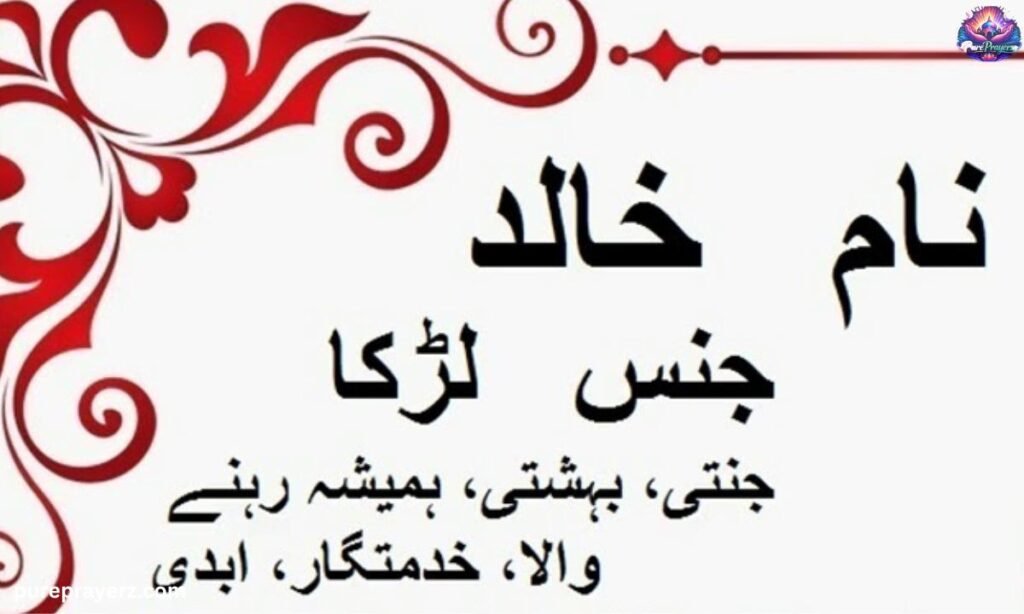
Using Khalid in Arabic sentences is essential for understanding both its pronunciation and grammatical placement. By examining real examples, learners can see how the word functions in everyday Arabic as well as in literary and historical contexts.
Here are some illustrative sentences:
- خَالِدٌ يَسْتَمِعُ إِلَى الْقِصَصِ التَّارِيخِيَّةِ
(Khalid is listening to historical stories.) - يُحِبُّ خَالِدٌ الْعِلْمَ وَالتَّعَلُّمَ
(Khalid loves knowledge and learning.) - ذِكْرُ خَالِدٍ سَيَبْقَى فِي قُلُوبِنَا دَائِمًا
(The memory of Khalid will remain eternal in our hearts.)
These examples demonstrate how the name conveys a sense of permanence or enduring quality, aligning with its meanings of eternal, immortal, and everlasting Khalid.
Additionally, proper pronunciation is critical. Khalid pronunciation follows Arabic phonetics: the “Kh” is a voiced fricative similar to the “ch” in Scottish “loch,” and the stress is on the first syllable. A correct pronunciation helps learners and speakers respect the name’s cultural and linguistic significance.
Cultural Significance of “Khalid”
The Arabic cultural significance of Khalid extends beyond language into history, religion, and society. Names in Arabic culture often carry deep symbolic weight, reflecting virtues, familial aspirations, and historical reverence. Khalid is no exception, being associated with concepts of immortality and enduring legacy.
Historically, Khalid ibn al-Walid, a companion of Prophet Muhammad (PBUH), became a legendary military leader whose strategies remain studied in military academies today. His name symbolizes courage, loyalty, and eternal remembrance, which reinforces the Islamic name Khalid as both meaningful and aspirational.
In modern Arabic society, Khalid remains a popular masculine name due to:
- Arabic names significance – conveying virtues like strength, wisdom, and permanence
- Religious connection – appearing indirectly in Quranic narratives or inspired by historical figures
- Linguistic beauty – derived from the root kh-l-d, emphasizing permanence
The name is also widely recognized internationally due to cultural exports, music, literature, and celebrities named Khalid. Its use highlights a bridge between tradition and modernity.
Common Misunderstandings or Mistakes
Despite its popularity, many make common mistakes Khalid when writing or pronouncing the name. A frequent confusion occurs between Khalid vs Khaled spelling, both representing the same name but with minor transliteration differences. Understanding the correct Arabic form خَالِد helps maintain cultural authenticity.
Other frequent errors include:
- Mispronouncing “Kh” as “K” rather than the proper Arabic fricative
- Confusing Khalid with Khalida (feminine Khalid)
- Misinterpreting the meaning as simply “long-lasting” without recognizing the spiritual connotation of immortality
For Arabic language learning, awareness of these nuances is essential, especially when exploring Arabic grammar Khalid or integrating the name into sentences. Learners can benefit from structured resources like Shaykhi Academy Arabic or Arabic education online, which focus on both pronunciation and contextual usage.
Must Read: Salam Arabic Meaning: The Secret Behind This Greeting
Why You Should Learn “Khalid”
Learning the meaning of Khalid is more than memorizing a name it opens a window into Arabic linguistics, culture, and history. By understanding the Khalid linguistic root, learners gain insight into:
- Arabic grammar and sentence structure – seeing how the root kh-l-d generates related words
- Cultural literacy – appreciating historical figures and modern references
- Religious context – understanding Quranic mentions like Surah Al-Qasas khuld and the concept of everlasting reward
Mastering the name also aids in Arabic pronunciation guide skills, enriching the learner’s ability to read, speak, and interpret Arabic properly. For writers, historians, or students of Islamic studies, understanding Khalid adds depth to textual analysis and cultural interpretation.
Khalid Meaning in the Bible
Though primarily an Arabic name, Khalid can be analyzed through biblical contexts where similar names convey eternal or enduring qualities. While the Bible does not directly reference the Arabic Khalid, the conceptual parallels eternity, immortality exist in names like Elijah or Eternal God references, showing a cross-cultural significance of naming traditions that emphasize permanence.
This perspective highlights how the eternal meaning Khalid resonates universally, transcending language and geography. Scholars of comparative religion and linguistics often draw attention to these thematic overlaps, connecting Arabic and Hebrew traditions in meaningful ways.
Khalid Meaning in Arabic
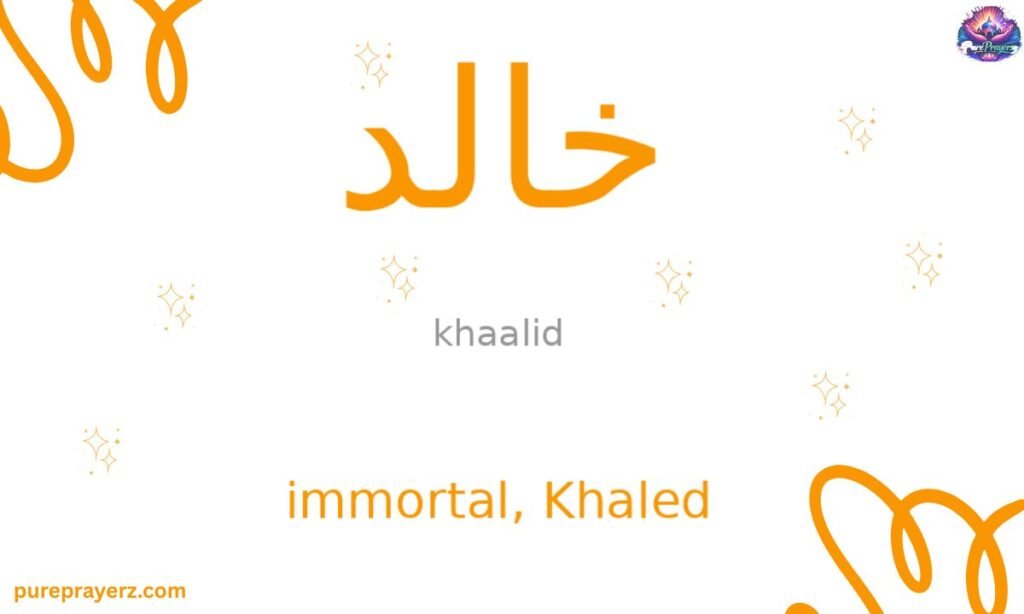
In its purest form, the Khalid Arabic name signifies eternal, immortal, and everlasting Khalid. Arabic dictionaries define it as someone who will endure through time, with Khalid pronunciation emphasizing the aspirated “Kh” sound.
Arabic sentences often use Khalid to highlight:
- Continuity of legacy
- Spiritual or historical permanence
- Respectful acknowledgment of a person’s enduring virtues
It is a quintessential example of how Arabic masculine names encapsulate both linguistic and cultural richness.
Is Khalid Name of Allah?
Some may ask whether Khalid name of Allah is valid. While Allah has 99 recognized names, Khalid itself is not one of the official Asma-ul-Husna, but the concept aligns with divine attributes like eternal existence and immortality. Using Khalid as a personal name reflects admiration for these qualities rather than claiming divinity.
Khalid Meaning in Quran in Urdu
In the Quran, the root kh-l-d appears in various forms, often in Surah Al-Qasas khuld, referring to eternal life or paradise. In Urdu translation, Khalid conveys:
- دائمی (permanent)
- ہمیشہ زندہ (everlasting)
- ابدی (immortal)
Understanding these references helps Urdu-speaking readers connect the linguistic and spiritual depth of the name, linking everyday usage with religious contexts.
Khalid Meaning in Hebrew
In Hebrew, Khalid is often transliterated phonetically but retains its symbolic sense of eternity and permanence. While not a traditional Hebrew name, scholars note conceptual similarities with words like “Chayyim” (life) and “Olam” (eternal world), emphasizing shared Semitic roots and the human fascination with immortality.
Khalid Meaning at PurePrayerz.com
Contemporary online platforms like PurePrayerz.com explain Khalid in spiritual and practical terms, highlighting its relevance in modern naming practices and Arabic education. It is listed as:
- A masculine Arabic name
- Derived from Arabic root kh-l-d
- Representing eternal qualities in both personal and religious contexts
Such resources help parents, learners, and enthusiasts make informed choices and understand the name’s cultural depth.
Must Read: Hayawan Meaning in Arabic Explained with Quran & Usage
Frequently Asked Questions
What is the meaning of Khalid in Arabic?
Khalid in Arabic means eternal, immortal, or everlasting. It comes from the root kh-l-d, symbolizing permanence, enduring legacy, and timeless significance.
How do you pronounce Khalid correctly?
Khalid pronunciation emphasizes “Kh” like the Scottish “loch,” with stress on the first syllable. Proper pronunciation preserves cultural and linguistic accuracy.
Who was Khalid ibn al-Walid?
Khalid ibn al-Walid was a legendary Islamic commander known for his military brilliance, courage, and enduring legacy, making Khalid a historically respected name.
Is Khalid mentioned in the Quran?
The root kh-l-d appears in the Quran, particularly in Surah Al-Qasas khuld, referring to eternal life and everlasting reward, connecting to the name Khalid.
What is the feminine form of Khalid?
The feminine version is Khalida, derived from the same root, carrying meanings of eternity and immortality while following Arabic gender grammar rules.
Conclusion
The name Khalid carries profound linguistic, cultural, and spiritual significance. From its Arabic root kh-l-d to its historical association with Khalid ibn al-Walid, it represents eternal, immortal, and everlasting qualities that resonate across generations. Understanding the meaning of Khalid enriches Arabic language learning, deepens cultural literacy, and bridges historical and modern contexts.
Whether in Quranic references, Hebrew parallels, or everyday Arabic sentences, Khalid exemplifies the beauty of a name that embodies permanence. By mastering its pronunciation, usage, and cultural implications, learners and enthusiasts can fully appreciate the depth of this timeless Arabic masculine name. Its enduring legacy makes Khalid not just a name, but a symbol of immortality and respect in both linguistic and spiritual traditions.